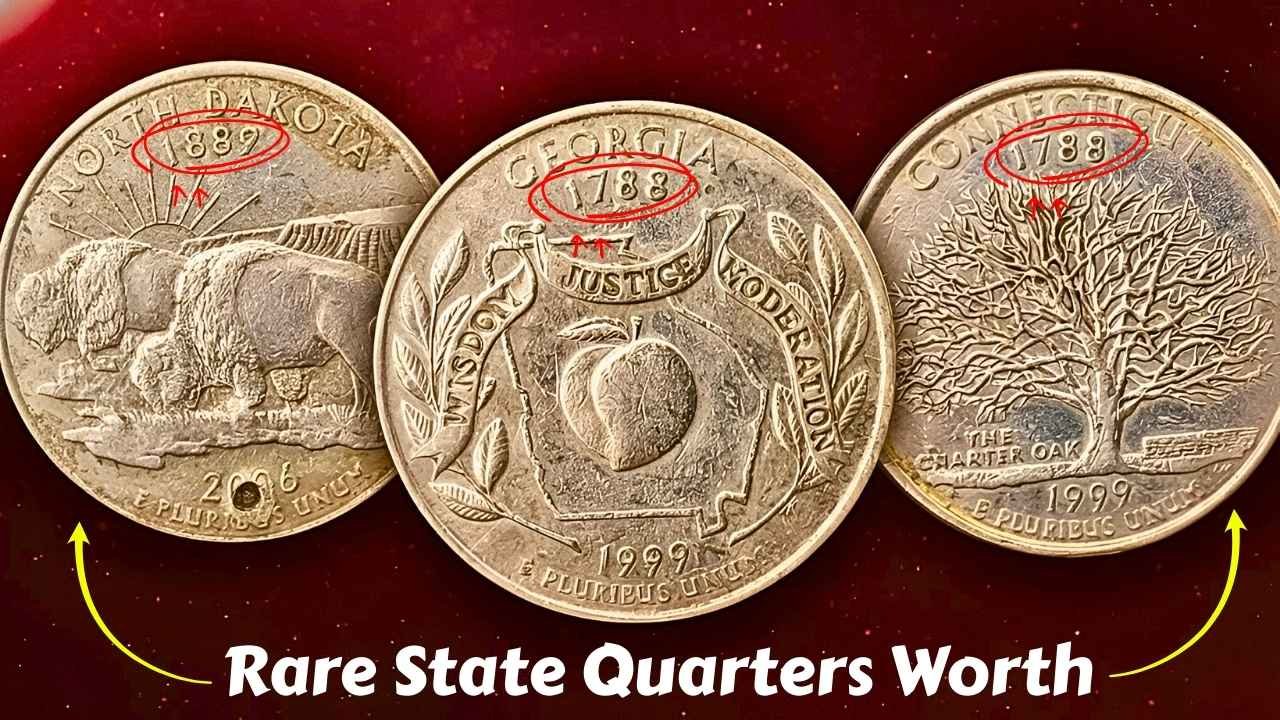
The U.S. State Quarters Program introduced millions of Americans to coin collecting. Released between 1999 and 2008, these quarters featured unique designs honoring each U.S. state. While most remain worth only face value, a small number of rare state quarters have become highly valuable. Some are worth thousands of dollars due to minting errors, low production numbers, or exceptional condition. Checking your spare change could reveal an unexpected treasure.
The Story Behind the State Quarters Program
The State Quarters Program was launched by the U.S. Mint in 1999 as a way to celebrate American history and encourage public interest in coin collecting. Five new state designs were released each year in the order states joined the Union.
Over ten years, billions of quarters entered circulation. While most were mass-produced, certain errors and special varieties slipped through, creating collectible coins that are now in high demand.
Why Some State Quarters Are Worth Thousands
The value of a state quarter depends on several factors. Rarity is the most important. Coins produced with mint errors or in limited quantities are far harder to find than standard issues.
Condition also matters. Quarters that were never circulated and retain their original shine are far more valuable than worn examples. Finally, collector demand plays a major role. Coins with well-known errors or unique stories attract strong interest at auctions.
Delaware Quarter With Spitting Horse Error
One of the most famous error coins from the State Quarters Program is the 1999 Delaware quarter with the spitting horse error. This error appears as a raised line extending from the horse’s mouth, caused by a die crack during minting.
Although subtle, this error is easy to recognize once you know what to look for. High-grade examples can sell for hundreds or even thousands of dollars, depending on condition.
Wisconsin Quarter With Extra Leaf Error
The 2004 Wisconsin quarter is one of the most valuable state quarters ever discovered. Some examples show an extra leaf on the corn stalk, either pointing high or low. This error occurred during die preparation and was never intended as part of the design.
Because these coins were released into circulation before the error was noticed, collectors scrambled to find them. Today, well-preserved examples are among the most sought-after state quarters and can be worth thousands.
Kansas Quarter With In God We Rust Error
The 2005 Kansas quarter features another famous error. On some coins, grease filled part of the die, causing the letter T in Trust to disappear. The result reads In God We Rust.
While the phrase is unintentional, the error became popular among collectors almost immediately. Coins with clear missing letters and minimal wear are especially valuable.
Minnesota Quarter With Doubled Tree Error
Some 2005 Minnesota quarters display a doubled image of the trees on the reverse side. This doubling was caused by a die error and is visible without magnification in some cases.
Because many examples were circulated before the error gained attention, finding one in high condition is difficult. Well-defined doubled tree quarters can command strong prices from collectors.
Arizona Quarter With Die Crack Errors
The 2008 Arizona quarter is known for dramatic die crack errors that resemble extra cactus arms or unusual raised lines across the design. These errors occurred late in the die’s life and vary from coin to coin.
More dramatic die cracks tend to be more valuable, especially when the coin remains in uncirculated condition. Some examples have sold for significant sums due to their striking appearance.
How to Check Your Change for Rare Quarters
Checking your quarters does not require special tools. Start by examining dates and designs carefully. Use good lighting and a magnifying glass to spot unusual features such as doubling, missing letters, or raised lines.
Compare your coin to standard images from reliable coin references. Any coin that looks different should be set aside for further research. Avoid cleaning coins, as cleaning can significantly reduce value.
The Role of Professional Grading
If you believe you have found a rare state quarter, professional grading is essential. Grading services verify authenticity, identify errors, and assign a condition grade.
A graded coin is easier to sell and often commands a higher price because buyers trust the certification. This step is especially important for coins potentially worth thousands.
Why State Quarters Remain Popular With Collectors
State quarters remain popular because they are easy to find and tell a story about American history. The program introduced millions of people to collecting and continues to inspire new hobbyists.
The possibility that rare coins are still in circulation adds excitement. Even today, collectors regularly check bank rolls, old jars, and inherited collections in search of valuable errors.
Key Highlights
The State Quarters Program ran from 1999 to 2008
Most state quarters are common, but some rare errors are worth thousands
Famous errors include extra leaves, missing letters, and doubled designs
Condition and rarity greatly affect a coin’s value
Professional grading helps confirm authenticity and maximize value
Final Words
Rare state quarters prove that valuable collectibles can still be hiding in plain sight. While most quarters are worth only 25 cents, a few stand out as genuine treasures due to minting errors and limited availability.
Taking time to inspect your change can be both educational and rewarding. Whether you are a seasoned collector or a curious beginner, the hunt itself is part of the excitement. With patience and knowledge, an ordinary pocketful of coins could turn into an extraordinary discovery.
