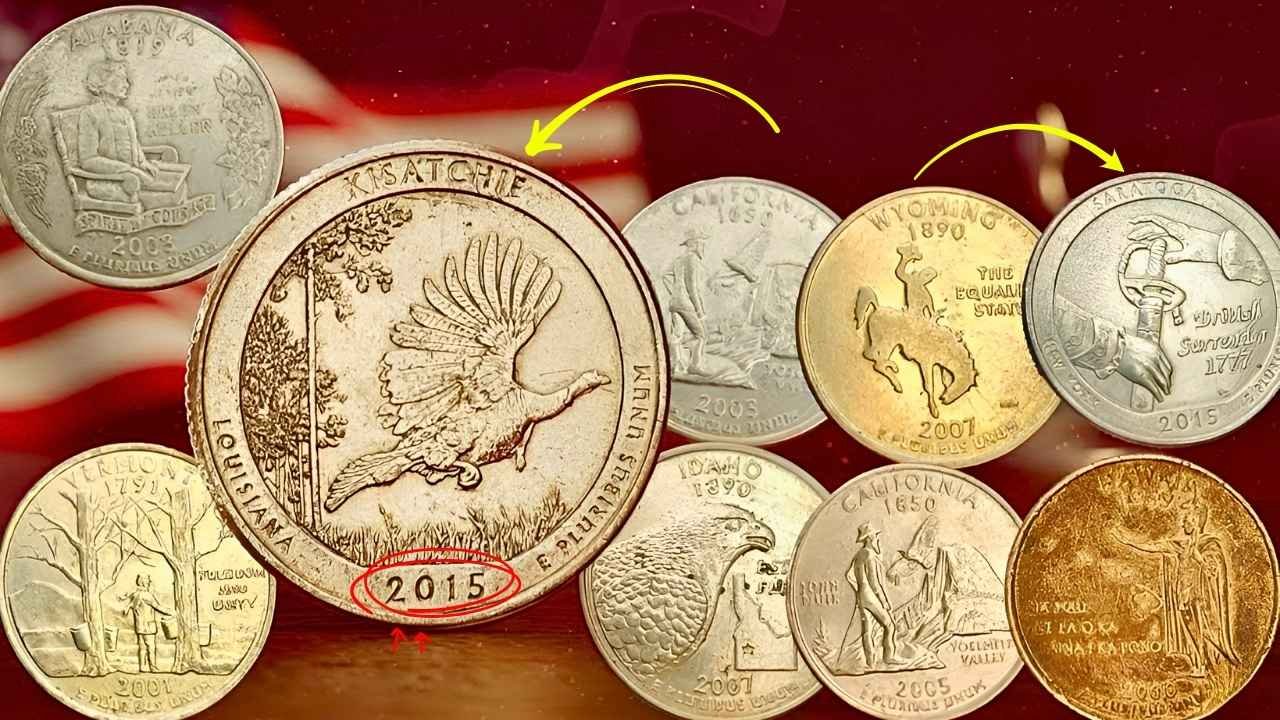
The U.S. State Quarters Program, launched in 1999, introduced millions of Americans to coin collecting. These quarters, each representing a U.S. state, were produced in huge numbers and used widely in everyday transactions. Because of that, many people assume state quarters are common and hold no special value. In reality, some rare state quarters are now worth far more than twenty-five cents, and in 2025, collectors are paying impressive prices for specific coins.
What makes certain state quarters valuable is not just age but rarity, minting errors, and condition. Many of these coins are still out there, hiding in jars, drawers, or old rolls of change. Knowing which ones to look for could turn an ordinary coin into an unexpected financial surprise.
Why Some State Quarters Are Valuable
Most state quarters were minted in the hundreds of millions, but not all were created equally. Coins become valuable when something unusual happens during production. This includes errors like doubled designs, missing elements, or extra details that were never intended. Limited mintages and coins preserved in near-perfect condition also attract strong interest from collectors.
In 2025, demand for rare modern coins continues to grow. Many collectors who grew up during the state quarter era now have the income to invest seriously in coins from their childhood, driving prices higher for the rarest examples.
1999-P Delaware State Quarter
The Delaware quarter was the first released in the state quarter series, making it historically significant. While most are common, some Philadelphia-minted coins in uncirculated condition are surprisingly valuable. Coins with sharp details, strong luster, and no wear are especially sought after by collectors who want pristine examples of the first state quarter.
2004-D Wisconsin Extra Leaf Quarter
One of the most famous error coins in the series, the 2004-D Wisconsin quarter sometimes shows an extra leaf on the corn stalk. There are two recognized varieties, known as the extra leaf high and extra leaf low. These errors were accidental and relatively few were made, making them extremely popular. Even circulated examples can be worth hundreds of dollars, while high-grade coins sell for much more.
1999-P Georgia State Quarter with Errors
Some Georgia quarters from the Philadelphia mint feature striking errors such as off-center strikes or doubled lettering. These mistakes are not obvious at first glance, but collectors who know what to look for pay close attention. Error coins from early state quarter years are particularly valuable due to collector demand.
2000-P South Carolina State Quarter
The South Carolina quarter had a lower mintage compared to many others, especially from the Philadelphia mint. While circulated coins are common, uncirculated examples with strong detail are increasingly difficult to find. Coins that have been carefully stored since release are gaining value in the collector market.
2005-P Minnesota Doubled Die Quarter
Some Minnesota quarters from 2005 display a doubled die error, most noticeable in the trees on the reverse side. This creates the illusion of extra tree outlines, which makes the coin stand out once you know where to look. These varieties are popular with error collectors and continue to rise in value.
2008 Alaska Proof State Quarter
Proof coins are specially made for collectors and are not intended for circulation. The Alaska proof quarter, especially those in perfect condition, is highly collectible. Proof coins with deep mirror-like surfaces and no imperfections can command high prices, particularly when certified by a professional grading service.
2000-P New Hampshire State Quarter
The New Hampshire quarter is another example where condition plays a major role in value. While common in circulation, uncirculated coins with original mint luster are increasingly scarce. Collectors in 2025 are paying premiums for coins that look exactly as they did when first struck.
2007 Wyoming State Quarter with Die Cracks
Some Wyoming quarters show noticeable die cracks caused by worn-out minting equipment. These cracks appear as raised lines across parts of the design. Although cracks were considered flaws, they are now highly collectible and add character and uniqueness to each coin.
1999-P Connecticut State Quarter
Certain Connecticut quarters from 1999 are valuable due to subtle minting variations and excellent preservation. Coins with strong strike quality and clean surfaces are becoming harder to find, and collectors are willing to pay for top-quality examples from the early days of the program.
2006 North Dakota State Quarter Errors
Error coins from North Dakota include off-center strikes and weakly struck areas. These mistakes occurred in small numbers and are now difficult to locate. As error collecting continues to grow in popularity, these quarters are gaining attention in the coin market.
How to Check Your State Quarters
Start by examining the year and mint mark, usually located on the front of the coin. Look closely at the design for anything unusual, such as extra details, doubling, or cracks. A magnifying glass can be very helpful. Pay attention to condition, as coins with minimal wear are almost always worth more.
If you believe you have a valuable coin, consider having it professionally graded. Certification helps confirm authenticity and can significantly increase resale value.
Key Highlights
- Some state quarters are worth hundreds or even thousands of dollars in 2025
- Minting errors like extra leaves, doubled dies, and die cracks increase value
- Early state quarters and low-mintage issues are especially collectible
- Uncirculated and proof coins are more valuable than worn examples
- Many rare state quarters are still found in everyday collections
Final Words
State quarters may seem ordinary, but hidden among them are rare coins that collectors are eager to buy. As interest in modern U.S. coins continues to grow in 2025, values for certain state quarters are climbing steadily. Taking the time to check your change, old coin jars, or stored collections could lead to an exciting discovery. With a little patience and knowledge, a simple quarter could turn into a valuable piece of American coin history.
