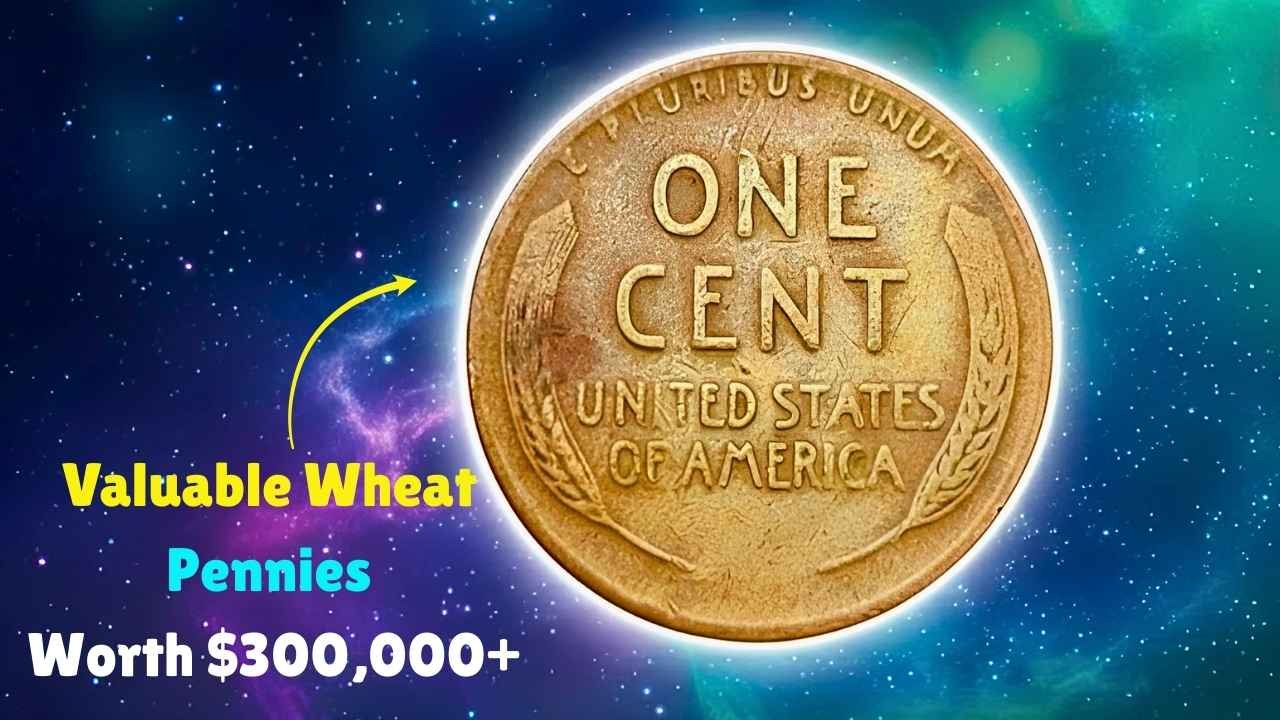
Wheat pennies are among the most fascinating coins in American numismatic history. Introduced in 1909, these small copper coins were once everyday pocket change, but today some of them are worth astonishing amounts of money. While most wheat pennies are common and inexpensive, a few rare examples have sold for $300,000 or more at auctions. What makes them even more exciting is the possibility that some of these valuable coins are still hidden in circulation, old jars, or forgotten collections.
The History of Wheat Pennies
The Lincoln wheat penny was first minted in 1909 to commemorate the 100th anniversary of Abraham Lincoln’s birth. It was the first U.S. coin to feature a real person. The reverse design displayed two wheat stalks framing the words “One Cent,” which is how the coin earned its nickname.
Wheat pennies were produced from 1909 until 1958, after which the design was replaced by the Lincoln Memorial reverse. During those early decades, minting methods, metal compositions, and wartime demands created unique variations, some of which became incredibly rare.
Why Some Wheat Pennies Are Worth a Fortune
Not every wheat penny is valuable, but certain factors can dramatically increase a coin’s worth. These include low mintage numbers, minting errors, unusual metal compositions, and exceptional condition. Coins from specific years and mints are especially desirable to collectors.
One of the most important factors is rarity. If only a small number of coins were produced or survived, demand naturally drives the value higher. Errors such as doubled dies or off-metal strikes can also turn an ordinary penny into a collector’s dream.
The Most Valuable Wheat Pennies Ever Found
Among the top 10 most valuable wheat pennies, a few legendary coins stand out. The 1909-S VDB penny is one of the most famous. Minted in San Francisco with the designer’s initials on the reverse, it had a very limited production run.
Another extraordinary example is the 1943 copper wheat penny. During World War II, pennies were supposed to be made from steel to conserve copper for the war effort. A small number were accidentally struck in copper, making them some of the rarest and most valuable U.S. coins ever discovered.
The 1944 steel wheat penny is another accidental rarity. That year, pennies were supposed to return to copper, but a few leftover steel blanks were used. These coins have sold for hundreds of thousands of dollars.
Mint Marks and Their Importance
Mint marks play a major role in determining a wheat penny’s value. Coins minted in Philadelphia typically have no mint mark, while those from Denver carry a D and San Francisco coins have an S.
Certain combinations of year and mint mark are especially rare. For example, the 1914-D wheat penny is one of the most sought-after coins in the series due to its low mintage and scarcity in high grades.
Collectors carefully examine mint marks because even a small difference can mean a huge change in value.
Errors That Create Hidden Treasures
Minting errors are one of the most exciting aspects of wheat penny collecting. Errors such as doubled dies, repunched mint marks, and off-center strikes can transform a one-cent coin into a six-figure collectible.
The 1955 doubled die wheat penny is a perfect example. The doubling on the date and lettering is clearly visible to the naked eye, making it one of the most famous error coins in U.S. history.
Because many people are unaware of these errors, valuable wheat pennies sometimes remain unnoticed for decades.
Are Valuable Wheat Pennies Still in Circulation?
While it is rare, valuable wheat pennies can still be found in circulation or old coin collections. Many people saved pennies in jars or piggy banks without realizing their potential value. Estate sales, flea markets, and inherited collections are common places where rare coins are discovered.
Checking old pennies carefully can be surprisingly rewarding. Even coins in worn condition can be valuable if they are rare enough.
The Role of Coin Grading
Coin grading is critical when it comes to high-value wheat pennies. Professional grading services evaluate a coin’s condition, authenticity, and overall quality. Grades range from heavily worn to mint state, and even a small difference in grade can significantly affect value.
Certified coins are far more trusted in the collector market and often sell for much higher prices at auction.
Why Collectors Love Wheat Pennies
Wheat pennies are popular not only because of their potential value but also because of their historical significance. They tell the story of early 20th-century America, including economic changes and wartime production challenges.
Collectors enjoy the thrill of the hunt, knowing that a tiny copper coin could be worth more than a luxury home. This combination of history, rarity, and excitement keeps wheat pennies in high demand.
Key Highlights
Wheat pennies were minted from 1909 to 1958 and feature Abraham Lincoln and wheat stalks on the reverse
Some wheat pennies are worth over $300,000 due to rarity and minting errors
Famous examples include the 1909-S VDB, 1943 copper, and 1944 steel pennies
Mint marks and errors play a major role in determining value
Rare wheat pennies can still be found in old collections and circulation
Final Words
Wheat pennies prove that incredible value can come from the smallest and most ordinary-looking items. What was once simple pocket change has become a symbol of hidden treasure for collectors around the world. While most wheat pennies are worth only a few cents, a rare example could change your life.
Taking the time to examine old pennies, learn key dates, and understand minting errors can be both educational and rewarding. You never know—one forgotten penny in a drawer or jar could be worth $300,000 or more
