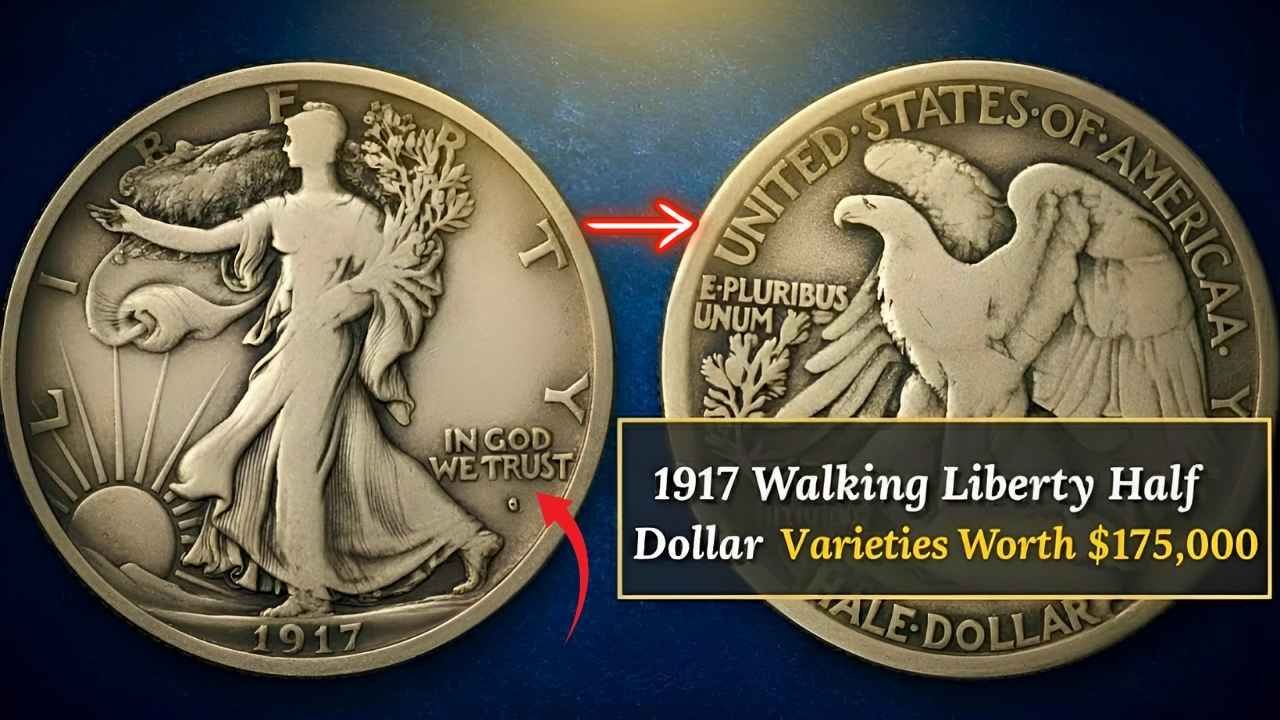
The Walking Liberty Half Dollar series remains one of the most admired designs in American coinage history. Among all the years this coin was minted, the 1917 issue is especially fascinating to collectors because it includes several rare and valuable varieties. These varieties are not just small minting differences; they have become treasures in the world of numismatics, with some examples commanding impressive prices at auctions. Understanding these rare varieties helps collectors appreciate both the beauty and the historical importance of this iconic coin.
The Story Behind the Walking Liberty Half Dollar
The Walking Liberty Half Dollar was introduced in 1916 and designed by sculptor Adolph A. Weinman. The coin features Lady Liberty walking toward the rising sun, symbolizing hope, strength, and progress. On the reverse, an American eagle stands on a rocky cliff, wings partly raised. Many collectors consider this design one of the most artistic and elegant in American coin history.
By 1917, the coin saw several changes in design placement, especially concerning the mintmark. These modifications created rare varieties that are now highly sought after.
Why the 1917 Issue Is Special
The year 1917 marks a transition in mintmark placement. Earlier coins had mintmarks located on the obverse, near Liberty’s figure. Later in the same year, the mintmark was moved to the reverse, just below the eagle. This shift created two major varieties for each mint. Because the Philadelphia Mint coin has no mintmark, collectors focus mainly on the Denver (D) and San Francisco (S) issues.
The fact that both obverse and reverse mintmark varieties exist within the same year has turned 1917 into a key date for variety collectors.
Rare and Valuable 1917 Varieties
1917-D Obverse Mintmark
One of the most sought-after coins from 1917 is the Denver Mint obverse mintmark variety. The early 1917-D coins featured the mintmark positioned on the front of the coin, a detail that was soon changed. Because this version had a shorter production period, it is considerably rarer. High-grade examples can reach significant values, especially those with strong strikes and minimal wear.
1917-D Reverse Mintmark
Soon after production began, the mintmark for the Denver Mint was moved to the reverse. While this variety is more common than the obverse mintmark, well-preserved pieces still attract strong interest. Collectors often seek both the obverse and reverse mintmark versions to complete a matched pair, making both varieties equally desirable in higher grades.
1917-S Obverse Mintmark
Like the Denver version, the San Francisco Mint also struck a limited number of coins with the mintmark placed on the obverse. These coins are not as plentiful in high grades, partly due to circulation wear and weaker strikes common to the San Francisco Mint during that period. Exceptional examples are often considered premium collectibles.
1917-S Reverse Mintmark
This is the most common of the four major varieties, but even so, high-grade pieces remain valuable. The reverse mintmark version offers collectors an easier entry point into the 1917 series, especially for those building a complete Walking Liberty set.
Factors That Affect Value
Condition
The grade of a coin is the most significant factor in determining its value. Walking Liberty Half Dollars from 1917 are often found heavily worn, so coins in extremely fine or mint-state condition command large premiums.
Strike Quality
Some mints struck coins with softer details. Collectors pay close attention to the sharpness of Liberty’s hand, gown folds, and the eagle’s feathers.
Luster
Original mint luster significantly increases the value of any 1917 variety. Coins with minimal cleaning and natural shine stand out in auctions and private sales.
Rarity of the Variety
Obverse mintmark varieties are considerably scarcer than reverse mintmark coins. Their rarity makes them an essential piece for serious collectors.
Historical Appeal
Because 1917 marks a transitional year, collectors value the historical significance behind the mintmark changes and early adjustments to the coin’s production.
What Makes These Coins Appealing to Collectors
Collectors are drawn to the 1917 Walking Liberty Half Dollar for several reasons. First, the design itself is timeless and artistic. Second, the mintmark varieties add a level of complexity that excites collectors looking to build a complete set. Third, the coin’s age and silver content make it a blend of historical and tangible value.

For new collectors, the 1917 issue offers a chance to learn about minting practices, while advanced collectors appreciate the challenge of finding high-grade examples. The rarity and beauty of these coins place them among the most memorable pieces in the Walking Liberty series.
Key Highlights
- The 1917 Walking Liberty Half Dollar is famous for its rare mintmark varieties.
- Both Denver (D) and San Francisco (S) issued coins with obverse and reverse mintmark placements.
- Obverse mintmark varieties are significantly rarer and more valuable.
- High-grade coins with strong strike details can command premium prices.
- The 1917 issue holds historical importance as a transitional minting year.
Final Words
The 1917 Walking Liberty Half Dollar stands out as a remarkable combination of artistry, history, and rarity. Its unique mintmark varieties make it an essential part of any serious coin collection, and its growing demand continues to elevate its value in the numismatic market. Whether you are an experienced collector or just beginning your journey, exploring the rare varieties of the 1917 Walking Liberty Half Dollar offers both an exciting challenge and a deeper appreciation for American coinage. Each variety tells its own story, turning these coins into treasured pieces of history that continue to captivate collectors around the world.
