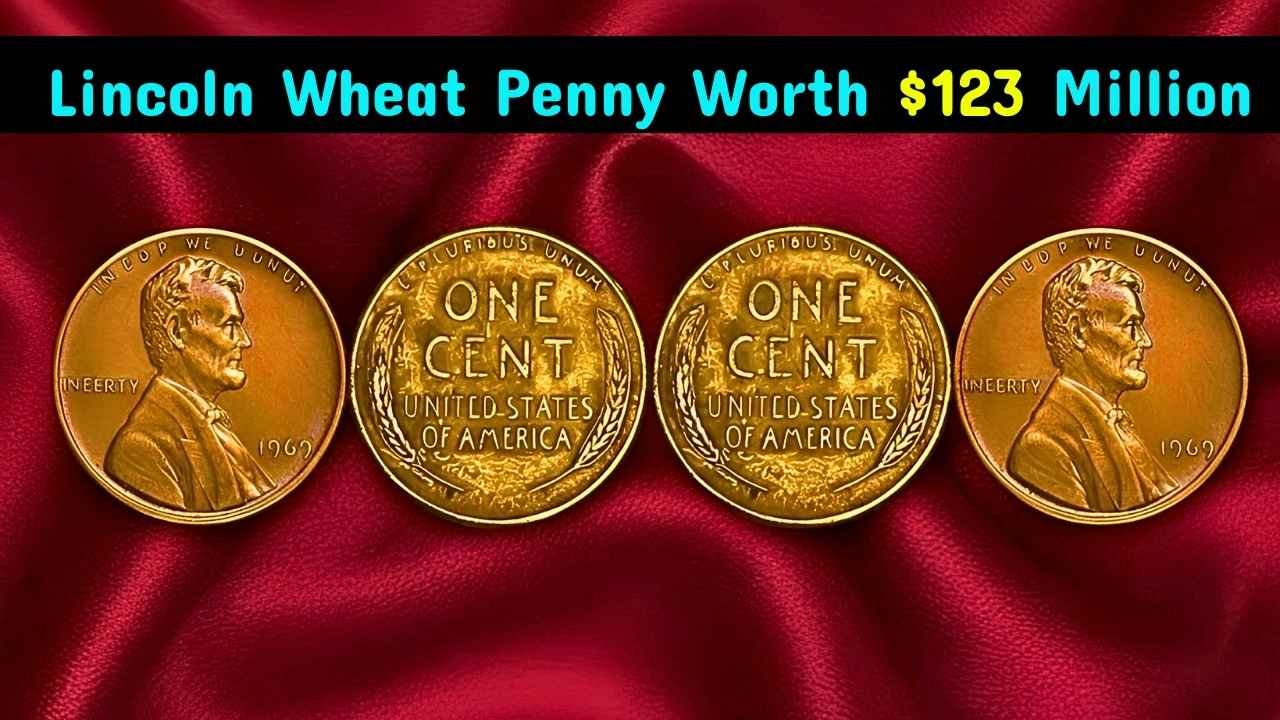
The idea of a Lincoln Wheat Penny worth $123 million still circulating today is an extraordinary claim that has captured the attention of collectors and the general public alike. While the figure sounds almost unbelievable, it serves as a fascinating entry point to explore the history of the Lincoln Wheat Penny, what makes certain coins valuable, and why myths about rare coins continue to spread.
History of the Lincoln Wheat Penny
The Lincoln Wheat Penny was first issued in 1909 to commemorate the 100th anniversary of Abraham Lincoln’s birth. Designed by Victor David Brenner, the coin features Lincoln’s profile on the obverse and two stalks of wheat on the reverse, giving it its nickname. It remained in circulation until 1958, after which the Lincoln Memorial design replaced the wheat ears.
Over the decades, the Lincoln Wheat Penny has become a favorite among coin collectors because of its long production run and historical significance. While millions of these coins were minted, some specific years and mint marks are extremely rare, which significantly increases their value.
What Makes a Lincoln Wheat Penny Valuable
Most Lincoln Wheat Pennies are worth only a few cents, but certain factors can make them highly sought after. The main elements that influence a penny’s value include its date, mint mark, condition, and any minting errors.
For instance, the 1909-S VDB penny is one of the most famous and valuable Lincoln Wheat Pennies. Only a limited number were minted at the San Francisco Mint with the designer’s initials (VDB) on the reverse. Another notable example is the 1943 copper penny, an accidental production error since most 1943 pennies were made from steel to conserve copper for World War II. Coins like these can sell for tens or even hundreds of thousands of dollars depending on condition and rarity.
The claim of a $123 million Lincoln Wheat Penny, however, is highly exaggerated. While it captures the imagination, no documented sale of any penny has ever approached this figure.
How Myths About Rare Coins Develop
Stories about coins worth tens or hundreds of millions of dollars often start as rumors or exaggerated online posts. Social media, clickbait articles, and YouTube videos amplify these claims, sometimes mixing true rare coin facts with unrealistic speculation.
In many cases, the myth persists because it encourages hope that everyday change might contain a treasure. While it is true that rare Lincoln Wheat Pennies exist, the likelihood of finding one worth millions in circulation is extremely low. Most high-value coins have already been discovered, verified, and preserved by collectors.
Realistic Value of Collectible Lincoln Wheat Pennies
For collectors, understanding realistic values is essential. Circulated Lincoln Wheat Pennies from common years usually range from a few cents to a few dollars. Key dates, mint marks, and errors increase the value considerably.
Coins in excellent condition, especially those graded by professional services, can sell for thousands of dollars. Error coins like doubled dies, off-center strikes, or the 1943 copper penny can command even higher prices. While these coins are highly collectible, none approach the $123 million claim.
Could a Valuable Penny Still Be Circulating?
While a coin worth millions is unlikely to remain in circulation unnoticed, it is possible for moderately valuable pennies to appear in everyday change. People often save coins without realizing their significance, and these coins can occasionally resurface in banks or collections.
The excitement around the $123 million claim serves as a reminder that rare coins can appear in unexpected places, but realistic expectations are crucial. Coins should be evaluated by professionals before assuming extreme value.
Tips for Collectors
Collectors who want to find valuable Lincoln Wheat Pennies should focus on dates, mint marks, and condition. Coins from key years, especially with mint marks like S (San Francisco) or D (Denver), are worth closer inspection.
Learning about common mint errors and understanding grading can also help collectors identify valuable coins. Professional certification from trusted grading agencies ensures that the coin’s value is accurately assessed and recognized in the market.
Why Lincoln Wheat Pennies Remain Popular
The Lincoln Wheat Penny continues to attract collectors because it combines historical significance with accessibility. Beginners can start collecting without spending a fortune, while advanced collectors enjoy hunting for rare varieties and high-grade examples.
The story of a $123 million penny, even as a myth, keeps public interest alive and encourages people to learn more about coin collecting. It inspires curiosity and appreciation for the history of American currency.
Key Highlights
The Lincoln Wheat Penny was minted from 1909 to 1958 and features Lincoln’s portrait with wheat stalks on the reverse
Certain key dates and mint marks make some pennies highly collectible
Error coins like the 1943 copper penny or doubled dies significantly increase value
The $123 million claim is a myth, but it highlights public fascination with rare coins
Collectors should focus on date, mint mark, condition, and professional grading
Final Words
The claim of a Lincoln Wheat Penny worth $123 million still circulating is more fantasy than reality, but it captures the imagination and brings attention to the fascinating world of coin collecting. Rare coins do exist and can be extremely valuable, but myths often exaggerate their worth.
For collectors and enthusiasts, the true reward lies in the history, craftsmanship, and stories behind each coin. Whether discovered in circulation or carefully preserved in a collection, Lincoln Wheat Pennies offer both educational value and the thrill of uncovering pieces of American history. The excitement of finding a rare coin should be paired with knowledge and realistic expectations to make the collecting experience truly rewarding.
