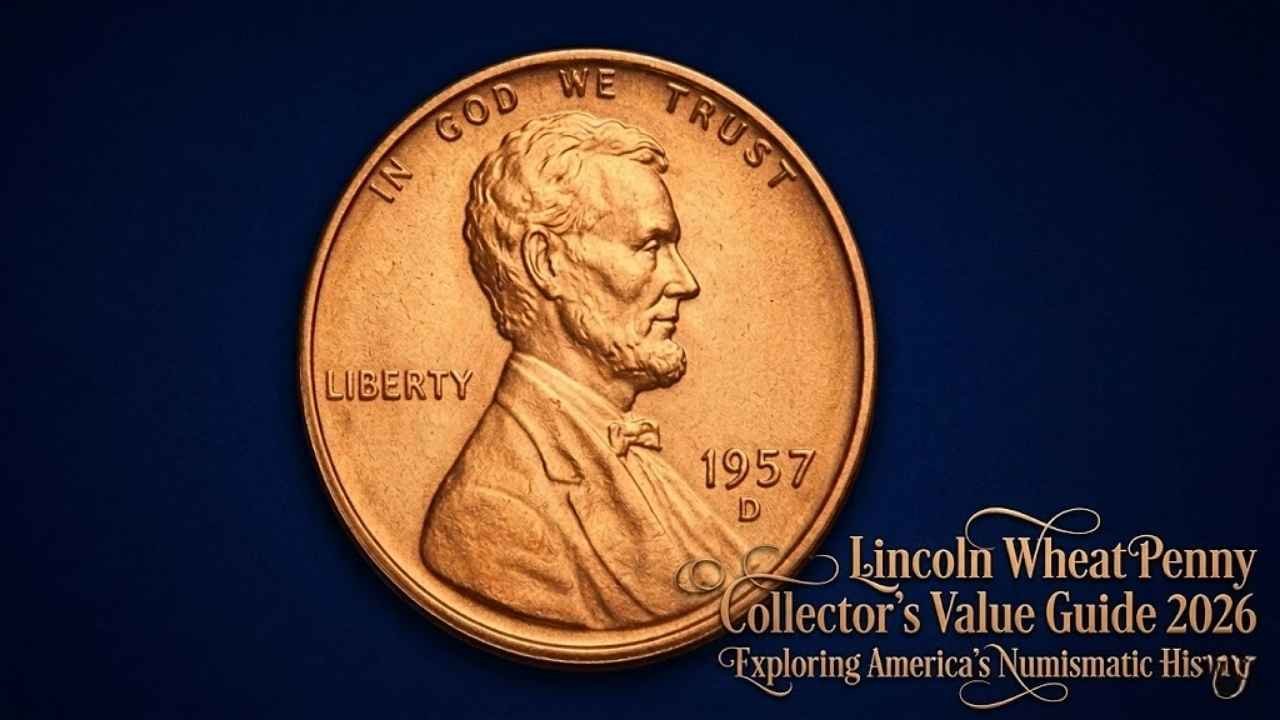
The Lincoln Wheat penny is one of the most beloved coins in American numismatics. Minted from 1909 to 1958, it features the familiar portrait of President Abraham Lincoln on the obverse and two wheat stalks on the reverse. For decades, it circulated widely, becoming a symbol of everyday life and American heritage. In 2026, collectors continue to treasure the Lincoln Wheat penny, not only for its historical significance but also for its rare varieties and investment potential.
Historical Background
The Lincoln Wheat penny was introduced in 1909 to commemorate the centennial of Abraham Lincoln’s birth. Designed by Victor David Brenner, it was the first U.S. coin to feature a real person rather than a symbolic figure. The reverse design, with two wheat stalks framing the words “ONE CENT,” symbolized prosperity and agriculture. The coin remained in production until 1958, when the reverse was changed to the Lincoln Memorial design.
Design and Symbolism
The obverse of the coin depicts Lincoln facing right, a design that has endured for more than a century. The reverse shows two wheat stalks, representing America’s agricultural strength. Collectors admire the simplicity and symbolism of the design, which connects the coin to both Lincoln’s legacy and the nation’s economic foundation.
Key Dates and Varieties
Several key dates and varieties make the Lincoln Wheat penny especially valuable. The 1909-S VDB is one of the most famous, with a low mintage and the designer’s initials prominently displayed. Other key dates include the 1914-D, 1922 no D, and 1931-S. Rare varieties such as double die obverses and off-center strikes also command premiums. In 2026, these coins remain highly sought after by collectors.
The 1909-S VDB Penny
The 1909-S VDB penny is perhaps the most famous Wheat penny. Struck at the San Francisco Mint, it features the initials of Victor David Brenner on the reverse. Only 484,000 were minted, making it rare and valuable. In 2026, high-grade examples can sell for thousands, while even circulated specimens are worth hundreds.
The 1914-D Penny
The 1914-D penny is another key date, with a low mintage of just over one million. It is rare in high grades and remains a cornerstone of Wheat penny collections. In 2026, values range from hundreds in lower grades to thousands for uncirculated examples.
The 1922 No D Penny
The 1922 no D penny is a famous variety created when dies from the Denver Mint were overused, resulting in coins without a visible mint mark. This error variety is highly prized, with values reaching thousands in high grades. In 2026, demand remains strong among collectors.
The 1931-S Penny
The 1931-S penny is another low-mintage issue, with fewer than one million struck. While not as rare as the 1909-S VDB or 1914-D, it is still valuable, especially in uncirculated condition. In 2026, it continues to be a key date for collectors.
Market Value in 2026
The value of Lincoln Wheat pennies in 2026 depends on condition, rarity, and demand. Common circulated examples are worth only a few cents, but rare dates and varieties can command impressive prices. Auction records show consistent appreciation for top rarities, with some coins selling for thousands. Professional grading and authentication remain essential for maximizing value.
Collecting Strategies
For collectors, building a Lincoln Wheat penny collection offers both enjoyment and investment potential. Searching through old coin rolls, inherited collections, and estate sales can yield valuable finds. Investing in professionally graded coins ensures authenticity and maximizes value. Proper storage in coin holders or albums helps preserve condition. Networking with other collectors and staying informed about auction results ensures awareness of market trends.
Historical and Cultural Significance
The Lincoln Wheat penny holds cultural importance beyond its monetary value. It symbolizes Lincoln’s legacy and America’s agricultural heritage. For generations, it was part of everyday life, often serving as a child’s first introduction to coin collecting. The coin connects modern numismatists to the history of the U.S. Mint, reminding us that numismatics is not only about value but also about heritage.
Investment Potential
Rare Wheat pennies have consistently proven to be strong investments. Their values have appreciated over time, particularly for high-grade examples and rare varieties. Investors view them as tangible assets that combine cultural heritage with financial opportunity. For those seeking diversification, rare coins provide both stability and excitement. In 2026, the Lincoln Wheat penny remains a promising area for collectors and investors alike.
Key Highlights
- The Lincoln Wheat penny was minted from 1909 to 1958.
- Designed by Victor David Brenner, it was the first U.S. coin to feature a real person.
- Key dates include the 1909-S VDB, 1914-D, 1922 no D, and 1931-S.
- Rare varieties such as double die obverses and off-center strikes add significant value.
- Values in 2026 range from a few cents for common coins to thousands for rare varieties.
- Collecting strategies include focusing on key dates, professional grading, and proper storage.
- The coin holds cultural importance as a symbol of Lincoln’s legacy and America’s agricultural heritage.
- Rare Wheat pennies offer strong investment potential.
Final Words
The Lincoln Wheat penny remains one of the most fascinating coins in American numismatics. While most examples are common, rare dates and varieties demonstrate the extraordinary value hidden in this historic series. In 2026, collectors continue to pursue these coins with passion, and investors recognize their potential as tangible assets. For collectors, the pursuit of the Lincoln Wheat penny combines history, artistry, and the thrill of discovery. For investors, it offers proven appreciation and cultural significance. Ultimately, this coin reminds us that even the smallest piece of copper can hold immense meaning and value, ensuring its place in numismatic history for generations to come.
