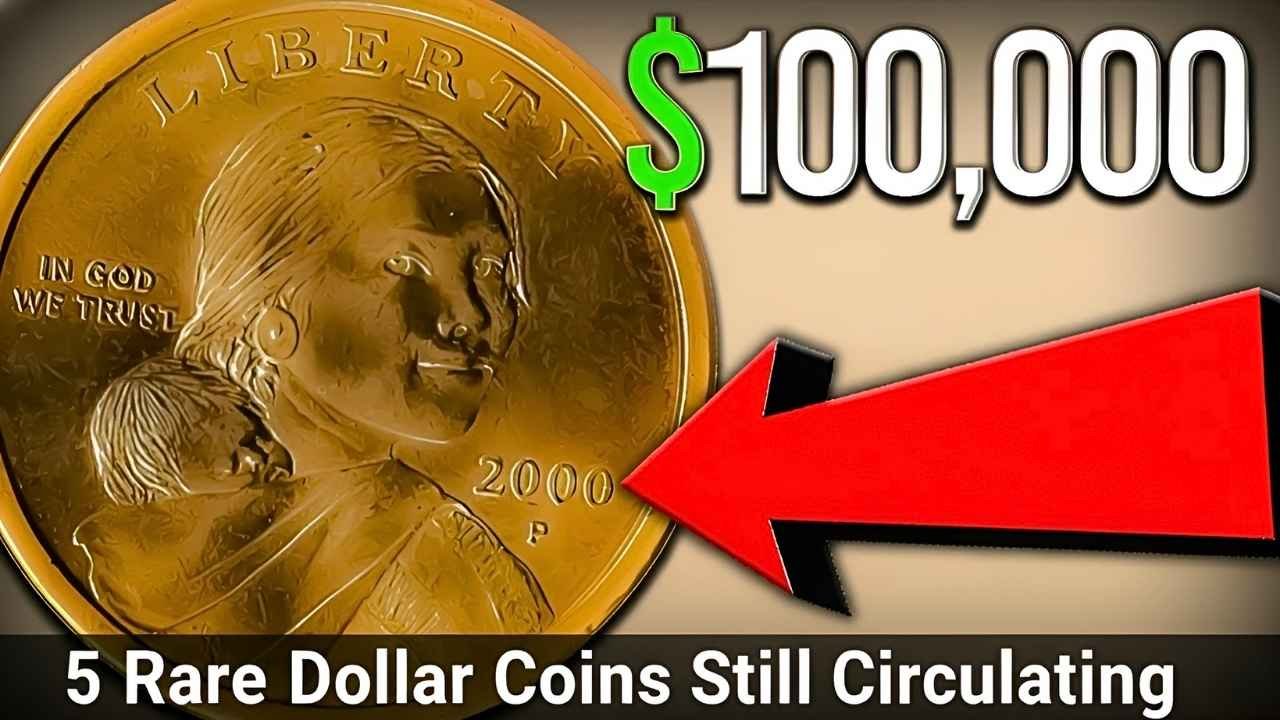
Most people handle money every day without giving it much thought, especially the coins that pass quickly from hand to hand. But hidden among ordinary change are a few U.S. dollar coins that collectors eagerly pursue. These coins, often overlooked because they resemble common issues, carry unique features, minting quirks, or limited production runs that elevate their value far beyond their face worth. While it might seem unlikely that rare coins still show up in circulation, the reality is that thousands of dollar coins are sitting in drawers, cash registers, and vending machine hoppers across the country.
If you take the time to check the dates, mintmarks, and slight variations, you could easily discover a coin that turns one dollar into hundreds or even thousands. Here are five rare U.S. dollar coins that may still be floating around today, offering the chance for collectors and everyday people alike to stumble upon an unexpected fortune.
1979 Susan B. Anthony Dollar Wide Rim Variety
When the Susan B. Anthony dollar debuted in 1979, the U.S. Mint produced two different rim styles. The more common Narrow Rim version appears in most coin rolls and collections. However, a small number of coins were minted with the Wide Rim design, easily identifiable because the date is closer to the edge of the coin. This variety was part of an early minting adjustment, and because of its limited production, it quickly became a collector favorite.
While millions of Susan B. Anthony dollars circulate, the Wide Rim coin stands out as one of the few that commands much higher prices. In well-preserved condition, it can sell for well over a hundred dollars, and exceptionally high-grade examples push into the thousands.
2000 Sacagawea Dollar with Wounded Eagle Reverse
The Sacagawea dollar introduced in 2000 featured a soaring eagle on its reverse side, but a small number of these coins display what collectors call the Wounded Eagle variety. This name comes from a noticeable die gouge that runs across the eagle’s torso, giving the appearance of a deep slash or wound. The flaw resulted from damaged mint equipment and was never intended to reach circulation.
Despite being an error coin, the Wounded Eagle variety managed to slip into the public money supply. Today, collectors actively seek it out, and its value reflects that demand. Even circulated examples carry strong premiums, and high-grade versions can bring in impressive amounts at auctions. If you ever come across a Sacagawea coin, checking the eagle side could be worth your time.
2007 Presidential Dollar Missing Edge Lettering
In 2007, the Presidential Dollar series began, featuring detailed edge lettering that included the year, mintmark, and national motto. During early production, however, some coins accidentally bypassed the machine that inscribed the edges. This resulted in a batch of coins with smooth, blank edges. These error coins were quickly identified and became a hot topic among collectors.
Coins missing edge lettering are unusual because their error is so easily recognized. They also hold strong appeal because they represent a significant minting mistake on a modern coin. Depending on the president featured on the coin, values range widely, but even lower-grade pieces can sell for substantial amounts.
2008 Sacagawea Dollar Cheerios Variety
In 1999, before the Sacagawea dollar was released to the public, the U.S. Mint partnered with General Mills to place promotional coins inside boxes of Cheerios cereal. These coins looked ordinary at first glance, but the reverse side featured an eagle design with enhanced detail, particularly on the tail feathers. Only a tiny number of these Cheerios dollars are believed to exist in circulation.
What makes this coin especially fascinating is that many families who received the promotional coin never realized its significance. Some children spent them, others tossed them into jars, and some may still be tucked away in forgotten storage boxes. Because of their rarity and unique design, Cheerios dollars can be worth thousands of dollars today.
1972 Eisenhower Dollar Type 2 Reverse
The Eisenhower dollar minted in 1972 has three known reverse types, but the Type 2 is the one collectors dream of finding. This version, distinguished by its more detailed Earth design and altered islands near Florida, was originally intended only for proof coins. However, a small number mistakenly entered general circulation.
The Type 2 variety is challenging to identify without a careful look, which means many people unknowingly handled it over the years. Because of its scarcity, this coin consistently sells for high amounts, and well-preserved examples command exceptional premiums.
Key Highlights
• Several rare U.S. dollar coins remain in circulation today
• Simple features like rim width, edge lettering, or minting errors can dramatically increase a coin’s value
• Some coins, such as the Cheerios dollar, originated from limited promotions and are extremely scarce
• Checking your spare change, coin rolls, or dollar coins from banks may reveal valuable surprises
• High-grade versions of these coins can be worth hundreds or even thousands of dollars
Final Words
Finding a rare dollar coin in circulation might feel like winning a small lottery, but it happens more often than people realize. Many of these valuable coins were spent unknowingly, mixed into coin rolls, or stored away and later reintroduced into public use. The key is simply knowing what to look for and taking a moment to examine the details that set rare coins apart from ordinary ones. Whether you are a collector or someone who occasionally receives dollar coins as change, keeping an eye out for these hidden treasures could lead to a surprising discovery. A single overlooked coin might just be worth a fortune, and it could be sitting in your pocket right now.
